

NN
Restoring Gwent's Rivers
Restoring river ecosystems, reducing flood risk and empowering local communities.
We’re leading partnership-driven river restoration efforts across Gwent:
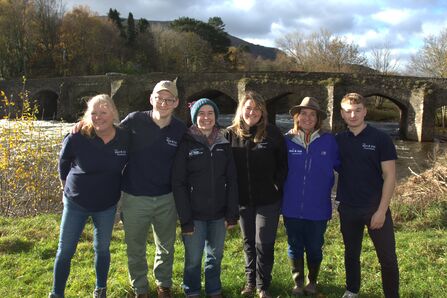
With the River Restoration Centre’s support, we’re upskilling staff to develop a freshwater restoration hub, contributing to a UK-wide network to enable knowledge sharing and guidance on restoration and management practices for landowners and the third sector.
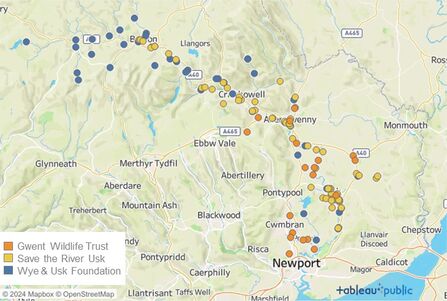
Working collaboratively with stakeholders, including the SE Wales Rivers Partnership, we’re developing catchment-scale, coordinated, evidence-based interventions. Our focus is on restoring natural river processes to improve habitat health and kickstart ecological recovery. Using the 'River Habitat Survey' and other monitoring techniques, we’re gathering baseline data while involving communities and citizen scientists.
In partnership with Natural Resources Wales, we’re developing our new floodplain meadow reserve, ‘The River Meadow,’ into a demonstration site for nature-based solutions, including creating scrapes, ponds, and the introduction large woody debris (Natural Flood Management, NFM).

You can read our update on this project on page 4 of our Spring/Summer 26 issue of Wild About Gwent.


Volunteer to help Gwent's Rivers and River Wildlife
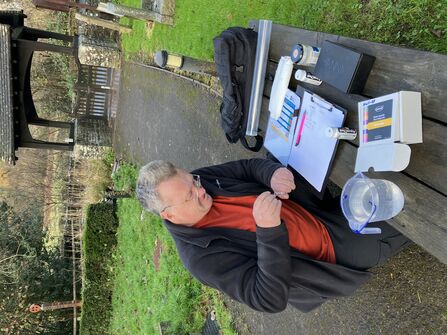
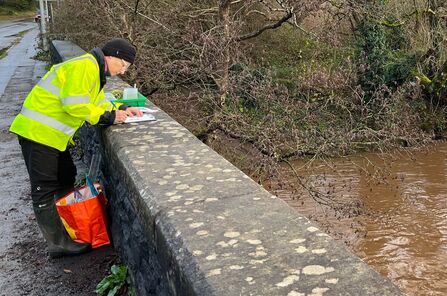
If you would like to get involved in some of our river-based activities such as Himalayan Balsam pulling, River Clean-ups or Aquatic Macroinvertebrate identification you can search for events and volunteer opportunities on Team Kinetic here:
Freshwater Volunteering Opportunities
Gerald Powell
CaSTCo
Susan Brown
NN
Why are we focusing on freshwater?
Gwent’s freshwater environment faces severe ecological stress. Across Wales, only 44% of rivers meet good ecological health standards (Water Framework Directive, 2021), while freshwater species abundance has declined by 20% since 1994. 91% of Atlantic Salmon stocks are now at risk (State of Nature, 2023) highlighting significant systemic issues within the freshwater environment. The 20th century saw a 50% loss of small waterbodies, such as ponds, due to extensive drainage, with 80% of those that remain classified as in poor condition (Freshwater Habitats Trust).
Climate change exacerbates these issues, with South Wales projected to see 16% more winter rainfall under a 2°C warming scenario. September 2024 was Wales’s wettest month on record, with 39% more rainfall than average, whilst conversely 2022 saw record droughts. These extremes destabilise ecosystems, reduce species resilience, and drive biodiversity loss. Currently, 105,564 properties in Wales are at risk of river flooding and 143,674 from surface water flooding. These figures are predicted to rise significantly over the next 100 years (NRW, 2023-24).
Understanding the pressures and impacts of human modifications to freshwater ecosystem - such as river straightening, the introduction of artificial beds, banks, and barriers, and the removal of wood and sediments - is crucial. These alterations disrupt natural flow and sediment dynamics, degrade habitats, and weaken ecosystem resilience. Restoring the natural physical processes of rivers and smaller waterbodies is essential for enhancing their ability to adapt to climate pressures and for kickstarting ecological recovery.
Our priority freshwater species
Our priority freshwater species are Dipper and Water Vole.
Water Vole: By restoring banks of rivers and streams, canals, reedbeds and marshes with fringes of lush, tall vegetation for food and shelter
Dipper: By creating fast-flowing unpolluted habitats with clean oxygenated riverbeds full of aquatic invertebrates
Find out why and how our targeted work for these is benefitting other wildlife which shares their habitat recover.