On our Reserves - June 2026

On our Reserves - June 2026

Doug Lloyd

Find out what our staff and volunteers have been up to on our reserves over the last few months and more importantly - why!

It’s been a busy few months across our reserves since our last update in February! As spring takes hold, the reserves have come alive with birdsong, wildflowers, and the first butterflies and bumblebees of the year. With nesting season now underway, our work has shifted from winter cutting to infrastructure improvements and the start of survey season. Read on to discover what we’ve been up to and our best wildlife highlights.

Down on the Gwent Levels 

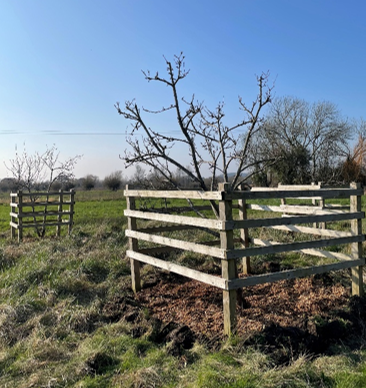
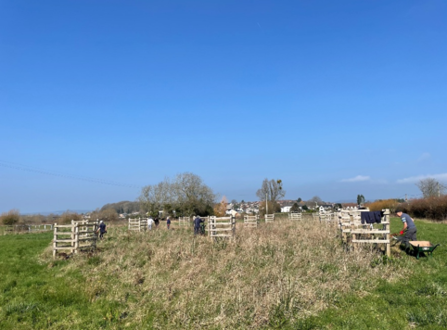
In March, the Levellers enjoyed a beautiful sunny day at Bridewell Orchard pruning the fruit trees to help encourage healthy spring growth. Wood chippings from pollarding work at Magor were recycled and used as mulch around the base of the trees, helping to conserve moisture over the summer while reducing competition from weeds and grass. Thanks to funding from the Welsh Government's Nature Networks Fund in partnership with the National Lottery Heritage Fund, we also replaced four apple trees that hadn’t survived with some local heritage varieties (St Cecilia, Monmouthshire Beauty, Brith Mawr, Gwell na Mil).

Because orchards are mosaics of trees, grasses, shrubs and wildflowers, they can often be wildlife havens. Spring blossom provides an early and essential food source for bees and other insects, while summer flowers continue to support them later in the season. As fruit trees age, they also create important deadwood habitats for invertebrates and birds. To maintain these benefits, orchards must be managed carefully with pruning to allow existing trees to mature, alongside the replacement of lost trees. This makes the work of our volunteers all the more vital in ensuring these spaces continue to thrive for wildlife into the future!
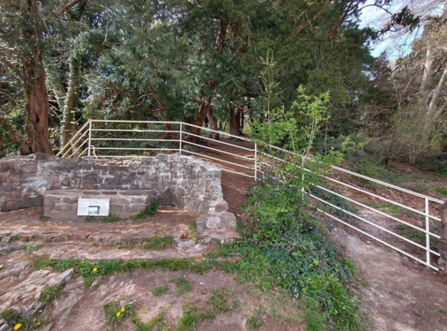
Work was recently carried out by contractors at Piercefield Wood, following a landslip at The Alcove last year that destroyed part of the onward path. New fencing has now been installed, and the monument has undergone a safety inspection alongside careful repointing of the stonework. These efforts will help preserve this historic viewpoint, ensuring it remains well maintained for future generations to enjoy its stunning views over the River Wye. Due to the impact of the landslip, the footpath has had to have been diverted meaning that The Alcove is no longer a through route and is accessible for the viewpoint only. Visitors can continue to enjoy the Wye Valley Walk at the top of path as before.

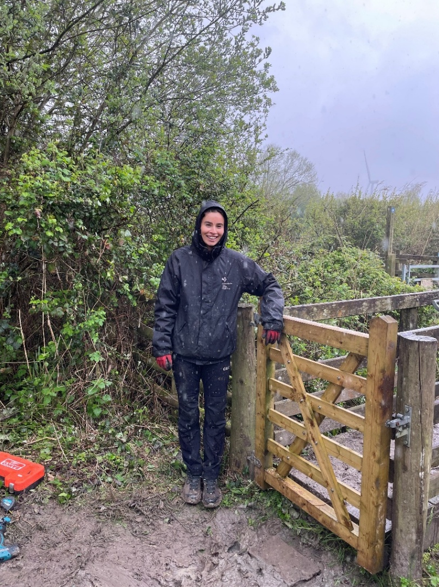
A total of 6 gates have been replaced across Rogiet Poorland and Great Traston Meadows in the last few months. A big thank you to the volunteers who worked hard through a very wet and soggy day to keep the reserve looking it’s best and to make it safe and accessible. 

Ditches and Reens across Magor Marsh and Bridewell Common underwent some restoration works in March including scrub clearance, desilting and casting. Removing accumulated silt, sediment and debris helps restore the ditches water-carrying capacity, prevent surface flooding and maintain healthy, functional drainage networks. Removing scrub helps reduce overshading of the aquatic ditches, protecting the SSSI feature for the rare invertebrate life and aquatic plants that live in them. This management work is crucial for protecting and maintaining these important habitats and was made possible through Natural Resources Wales and funding from the Nature Networks Fund (Round 4).

Usk to Wye

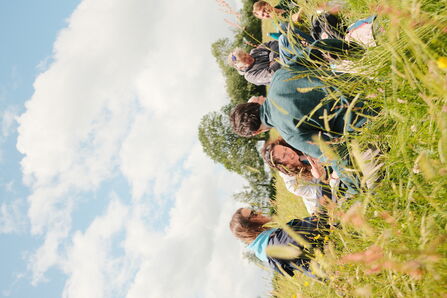
This year marks the 25th anniversary of our Springdale Farm Nature Reserve! To celebrate all the hard work that has gone into making the reserve what it is today, we held a special event on 9th June, including a picnic in the meadow, meadow plant identification, and a guided walk around the site.

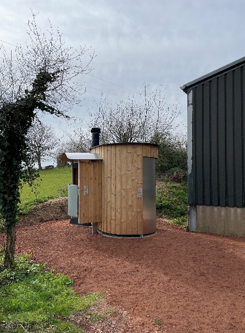
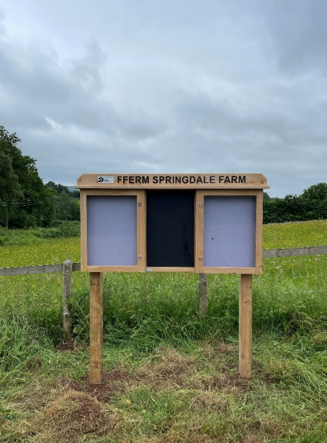
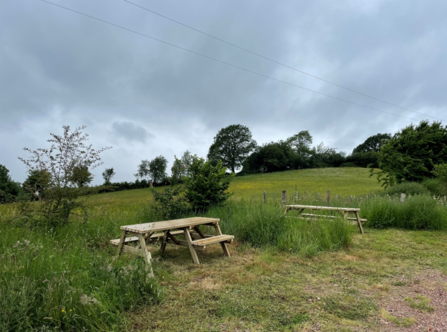
Over the past few months, work at Springdale has included installing a new compost toilet to make the reserve more accessible for events like this, as well as for volunteers and day-to-day management. We’ve also added new picnic benches near the car park for visitors to relax and enjoy the views, along with a noticeboard where people can record their wildlife sightings across the reserve. Both the toilet and two of the picnic benches are fully accessible for wheelchair users. These improvements were made possible thanks to funding from Monmouthshire County Council’s Access Improvement Grants.

  • Ty Mawr - Hedge Laying and Tree Planting

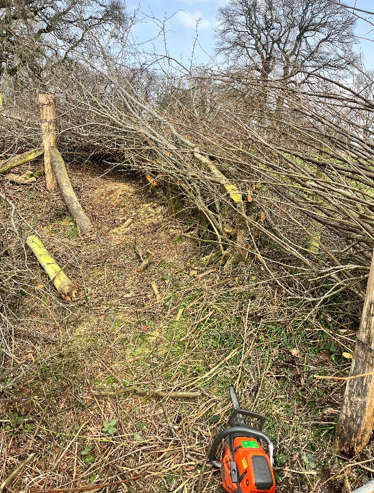
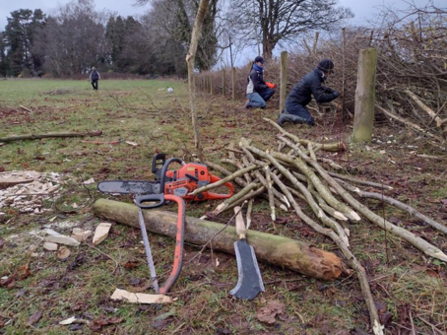
Between January and March, a determined group of volunteers and staff spent several weeks hedge laying at Ty Mawr. Hedge laying is a traditional technique, used by farmers and landowners as a nature-friendly alternative to fencing. It involves partially cutting young trees so they can be laid at an angle while continuing to grow from the base. Over time, this creates a dense, healthy hedge that can act as a livestock barrier while also providing valuable habitat for wildlife. Hedgerows play an essential role in the UK landscape, acting as wildlife corridors that connect fragmented habitats and supporting a wide variety of species that rely on these narrow strips of wilderness to feed, breed, and thrive.

In total, we laid around 200 metres of hedge using billhooks, saws and chainsaws, with many volunteers enjoying the opportunity to learn a traditional skill! This work was funded through Ffermio Bro, a Welsh Government programme that supports farmers and landowners in adopting nature-friendly practices and enhancing biodiversity. We also planted several oak trees across the reserve to create a mosaic for habitats for future wildlife. 

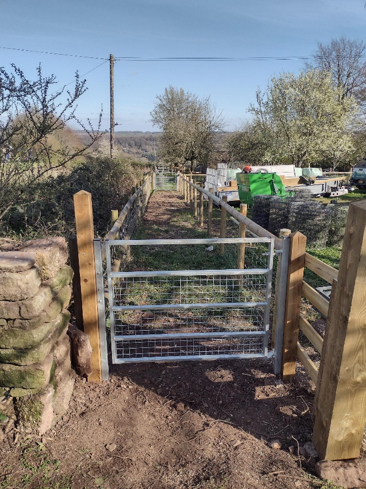
In April we installed a new permissive path through the yard at Pentwyn Farm making it safer and more accessible for people to enjoy. This involved taking down and rebuilding the end of the village green boundary wall, cutting back vegetation to create the new path, installing two new gates and a putting up a new post and rail fence to bound one side of the path. A big thank you to the Penallt Footpath Group who volunteered their time to help get it done and to MonLife for providing the new gates. 

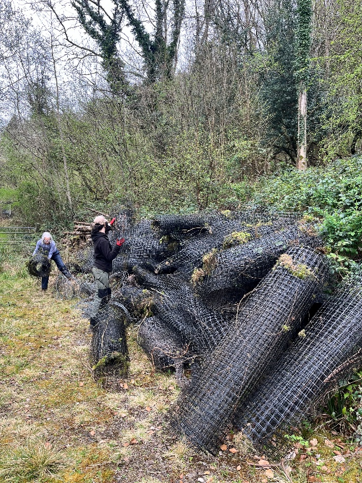
Our Usk to Wye volunteer group has been busy removing old deer netting that once protected previous coppice coupes in Croes Robert Wood. This temporary netting was originally installed to protect emerging shoots on coppice stools from deer browsing, but with healthy hazel regrowth now established, it has served its purpose. Removing the netting is helping to open up the woodland once again and reducing the amount of plastic left on site. We collected a huge amount of material, which will now be removed entirely to make the site safer for wildlife.

Over in the Eastern Valleys 

  • River Meadow Wetland project and Himalayan Balsam

At River Meadow, our Reserves Team and regular volunteers along with our Senior Restoration Officer Chloe have been tackling Himalayan Balsam. As its name suggests, this plant originates from the Himalayas and was introduced to the UK in the 19th century. It has since become an invasive species along riverbanks and wet ditches, where it spreads rapidly, forms dense stands, and outcompetes native plants. The team will continue pulling the plants throughout the summer to help control its spread and reduce its impact.

In conjunction with Natural Resources Wales we have also been planning some exciting wetland restoration works with designs to transform the site into a wetland exemplar. These plans include creating scrapes and ponds to provide valuable habitats and water sources for wildlife, and with its ideal location along the River Usk, the hope is that this work will also support natural flood management. A dedicated group of citizen scientists has also been carrying out riverfly monitoring at the site which is helping to assess river health by sampling and counting eight key pollution-sensitive invertebrates (mayflies, stoneflies, and caddisflies)We are super excited to keep you updated on the progress of this project! 

volunteers working together to pull Balsam

Ian Thomas 

Species highlights

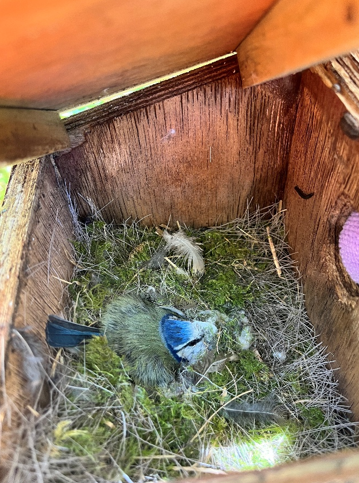
The first dormouse surveys of the year have taken place at Croes Robert and excitingly, we’ve already recorded our first dormouse! As they are only just emerging from hibernation, it’s not unusual to see very few at this stage, but after last year’s successful season with an impressive 14 dormice recorded during the final monitoring round in October, we’re hopeful for another great year. Many of the nest boxes were also occupied by blue tits, great tits and wrens with several sitting on nests and one nest containing an impressive 13 eggs!

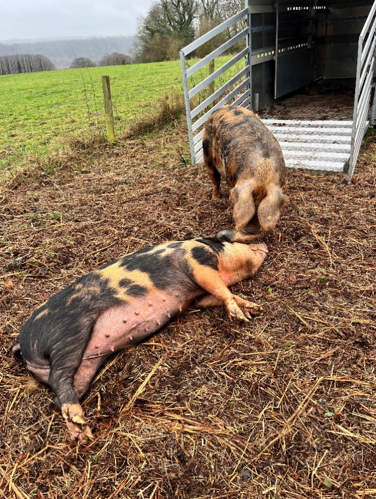
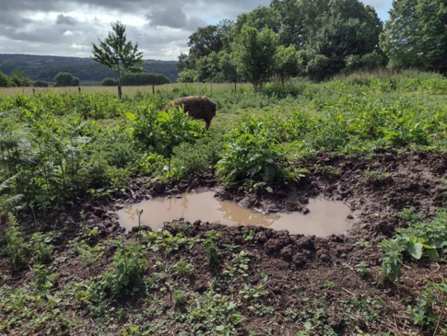
We’ve had some special visitors at Pentwyn Farm over the past few months, and they’ve quickly become a favourite walk stop for both staff and visitors. Hazel and Willow, our two pigs, have come from Senior Conservation Grazing Officer Joe’s farm and have been busy creating some fantastic new habitats. Their natural rooting behaviour helps clear dense vegetation like bracken, break up compacted soil, and create a patchwork of varied ground conditions. In doing so, they form diverse microhabitats, including small temporary pools that provide valuable water sources for wildlife. 

  • Reptile surveys 

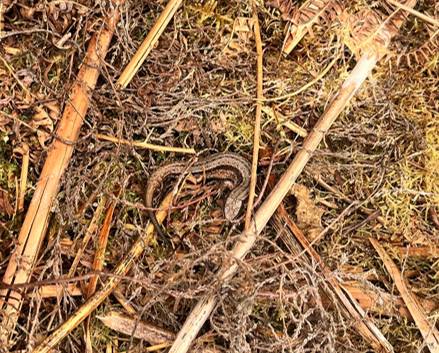
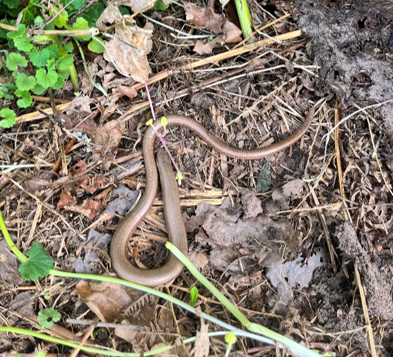
We now have reptile surveys taking place across 13 of our reserves thanks to all of our amazing volunteer surveyors! These surveys contribute to the National Amphibian and Reptile Monitoring Programme run by the Amphibian and Reptile Conservation Trust (ARC), making them important not only for understanding which species call our reserves home, but also for building a bigger picture of how their populations are doing. Surveys are carried out monthly from April to October, and we’re already seeing exciting results, including sightings of a common lizard and several slow worms.