Meet the Conservation Grazing Officer

Meet the Conservation Grazing Officer

Long horn cattle at sunrise

Joe Ryder

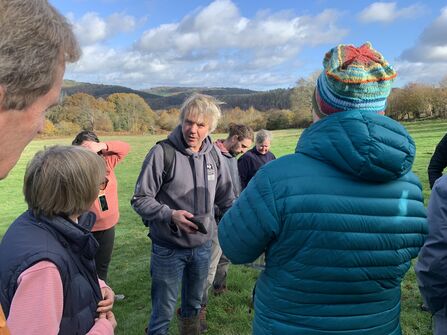
GWT's Senior Conservation Grazing Officer Joe plays an important role in bringing Wyeswood Common back to life. Abi Davies, Marketing and Communications Officer, catches up with him to find out more about his work, the importance of conservation grazing and how our Big Give Christmas Challenge will help create an even wilder future for this special landscape.

Could you tell us a little about your role as Conservation Grazing Officer and what your work involves? 

People often ask me, “what is it you do at work?”. My role as Conservation Grazing Officer at Gwent Wildlife Trust is very varied and like that of a livestock farmer! 

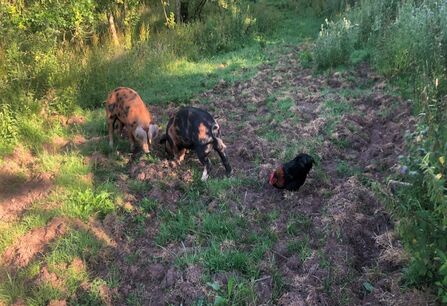
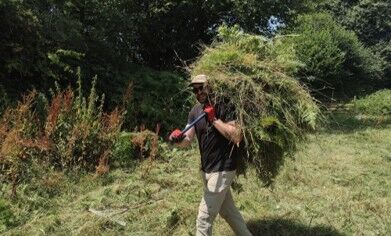
I directly manage our Gwent Wildlife Trust livestock on Wyeswood Common and Pentwyn Farm.  We have sheep and cattle and occasionally other visitors such as Welsh mountain ponies and pigs!  By carefully managing grazing of these creatures for nature recovery across Wyeswood and Pentwyn, we can help increase biodiversity of the whole farm. I also liase with livestock keepers, farmers and contractors across Gwent to assist with the grazing requirements, hay cutting and other grassland management activities of our ever expanding 350 ha estate.   Alongside that there is the farm infrastructure and machinery to consider for example, livestock fencing, gates, public access through fields with livestock,  and vegetation cutting equipment.    There is also the framework of farm and livestock legislation within Wales and a new agricultural environment scheme “Sustainable Farming Scheme” for 2026 to implement across our GWT estate…thus it’s a varied role! 

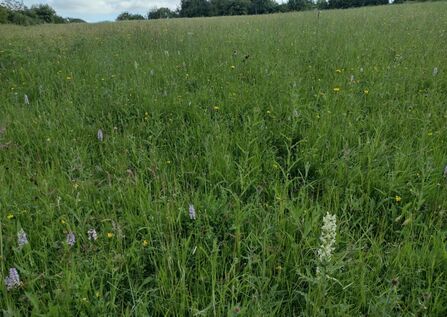
A field of blooming wildflower

Joe Ryder

What first interested you in conservation grazing, and what do you enjoy most about working with livestock to support nature recovery? 

I first learnt about conservation grazing on a field trip to Yately common in 1992 where they were grazing ponies on lowland heathland and had plans to introduce cattle.  Growing up on a livestock farm this seemed a rather strange idea! However, without grazing of some sort these rare habitats soon revert back to woodland losing their historical and conservation connection to traditional grazing practices that for many hundreds of years provided a important habitat long before modern farming techniques began.  From this point I began to understand more about the importance of the role of grazing livestock within nature reserves and country parks.  

One of the best parts of working with livestock is there’s so much to learn and every day is different - watching how cattle interact with one another and how they interact with nature is fascinating for example, bats searching out cattle in early evening summer to feed on inverts.  

For those who haven't visited, how would you describe Wyeswood Common? What makes this particular landscape special? 

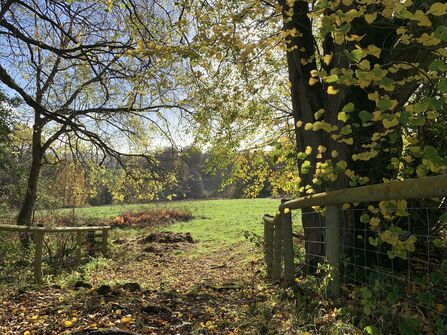
Wyeswood is predominately a grassland reserve with open views across the Wye Valley and it’s a wonderful place for a relaxing walk.  Following 18 years of restoration it’s a great demonstration that with hard work and commitment it is possible to return nature depleted landscapes back to being rich in biodiversity within a working farm landscape.   It has around 50 acres of restoration hay meadows that have been restored through seeding and green hay spreading from Site of Special Scientific Interest (SSSI), Pentwyn Farm.  During the months of May/June and July they are wonderous in flower and seed with huge numbers of inverts and fantastic displays of foraging Swifts. 

Conservation grazing plays an important role in managing our nature reserves. Could you explain how grazing animals help create and maintain habitats for wildlife? 

Livestock grazing is essential for numerous wildlife habitat types from the more obvious such as grasslands and heathlands, to wood pasture and flood plains.  Grazing by cattle, ponies or sheep at some point in the seasons will increase their nature value.  Though there are different grazing techniques, they make a mosaic of vegetation habitats from short, grazed grass to light browsing of hedgerows.  If managed in the correct way a small herd of cattle become a “walking habitat” grazing and manuring the land and provide a cyclical system for invertebrates like Dung beetles and midges through to bats and birds feeding on the inverts.  

 A simple example of conservation grazing is the management of a traditional hay meadow.  Following the cutting of the hay in summer July/August (for livestock feed) the hay meadow is grazed through the autumn and early part of winter by cattle and sheep, and this targeted grazing is an essential part of hay meadow management.  

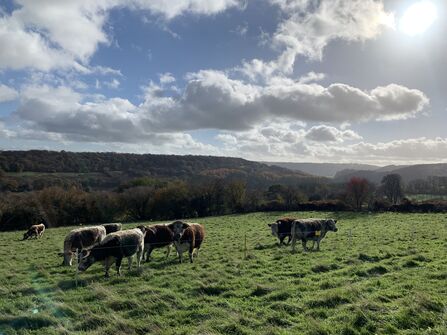
Herefords, Wyeswood Common

Herefords, Wyeswood Common. Credit Pauline Gaywood.

Our plans for Wyeswood Common include restoring species-rich grassland, creating new habitats and connecting existing ones. What changes are you hoping to see across the landscape over the coming years? 

As the restoration works begin to gather pace over the next few years it will be exciting to see what new species will be attracted to Wyeswood. Recently, I flushed up two Common snipes (Gallinago Gallinago) from a uncut hay meadow corner, a species I’ve not seen in the past seven years on the reserve! 

We have also had a great season for Barn Owls at Wyeswood, they have been hunting field voles on the scrubby field edges of the Wyeswood Common, rearing five healthy chicks.  Stonechat is another species that has become more abundant over the last two seasons. Hopefully these types of sightings continue over coming years! 

What do you enjoy most about working at Wyeswood Common? Is there a particular part of the site that stands out to you? 

It such a wonderful site it’s hard to choose one particular area that is a favourite.  However, on a warm summer evening arriving at the car park and walking out into the large hay meadow looking over the Wye Valley view is always an inspiring moment.  There are many other hidden views and habitats across Wyeswood - the area of Ancient Woodland toward the bottom end of the reserve is beautiful display of Bluebells in April/May. 

What are some of the challenges involved in managing a landscape like Wyeswood Common? 

There are numerous challenges managing wildlife sites across Wales.  The infrastructure is often hidden from view when visiting reserves, such as livestock fencing and gateways for accessing . On Wyeswood we have 4.2km outer boundary with 46 field gates and 22 water troughs to maintain.  These are only just a few of the important equipment we need to maintain the site for grazing livestock and our visiting public! 

This December, we're taking part in the Big Give Christmas Challenge, aiming to raise £25,000 for Wyeswood Common.  If you could share one thing with someone considering supporting the Wyeswood, what would you want them to know? 

Over the last 36 years the reserve has expanded in size from 12 acres to 135 acres of protected land for nature and people to enjoy.  By supporting this year’s Big Give Christmas Challenge for Wyeswood you will be helping to protect and expand a place for nature to thrive for future generations to come!